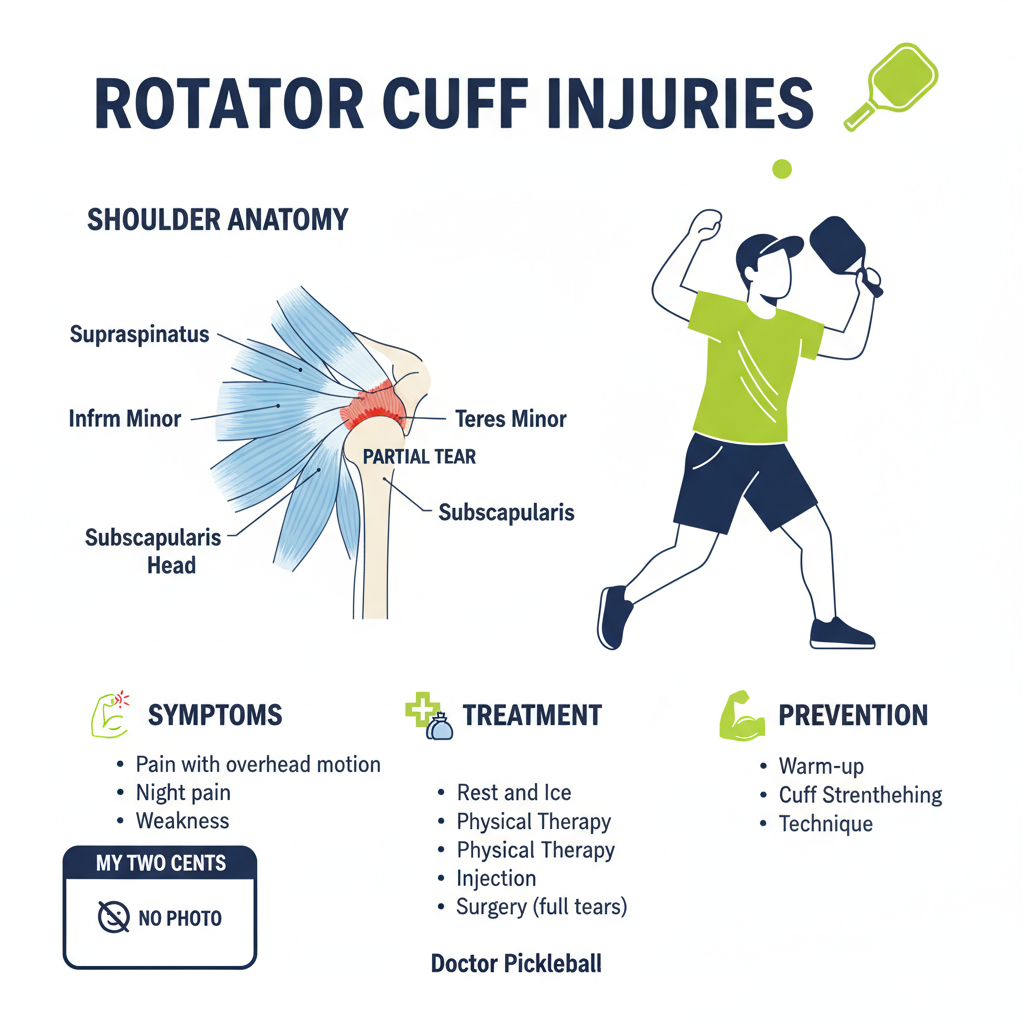
Shoulder4 min
Rotator Cuff Injuries
Few things spoil a rally faster than a shoulder that suddenly refuses to cooperate — most rotator cuff problems respond well to sensible treatment.
Read article →
Medicine. Innovation. Healthy Living. Generosity.
Practical orthopedic guidance for pickleball players — from common injuries to recovery, prevention, and getting back on the court.
Hands, wrists, elbows, and forearms take a surprising amount of stress in pickleball. Here are the conditions we see most often.
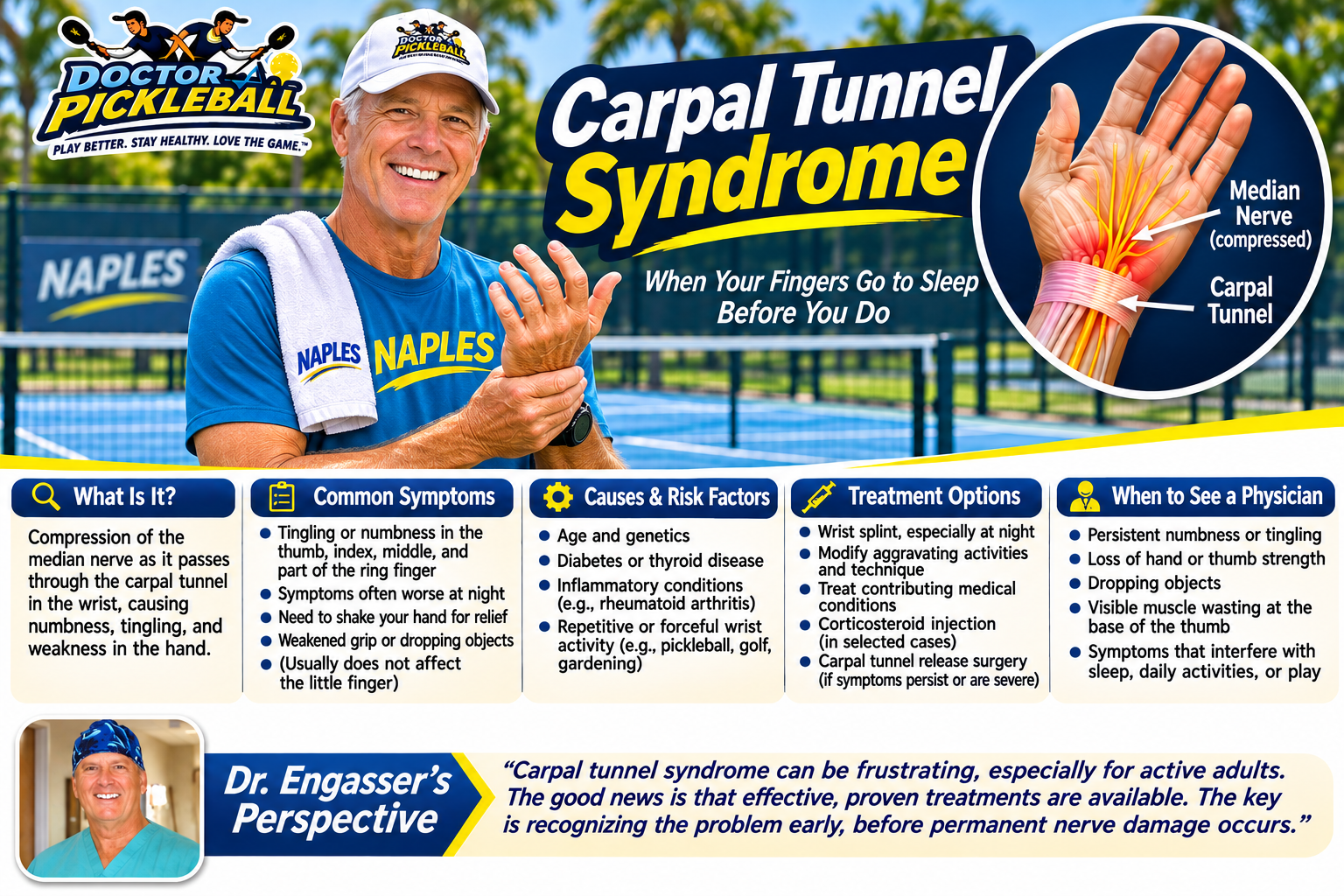
That tingling in your hand at 3 a.m. isn't just bad dreams — it might be your median nerve asking for a break.
Read article →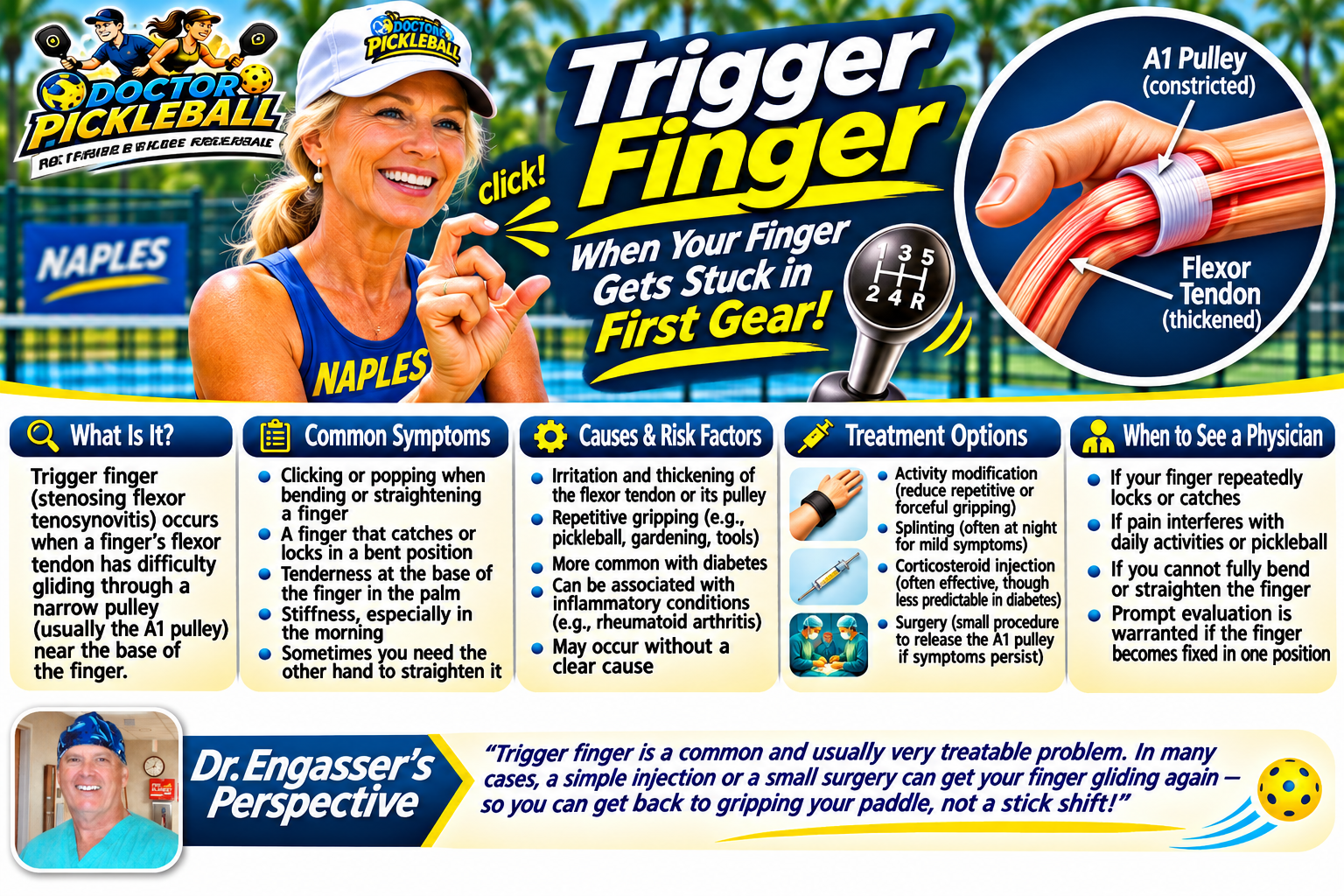
When your finger locks up mid-swing, it's not a mechanical malfunction — it's a very fixable tendon problem.
Read article →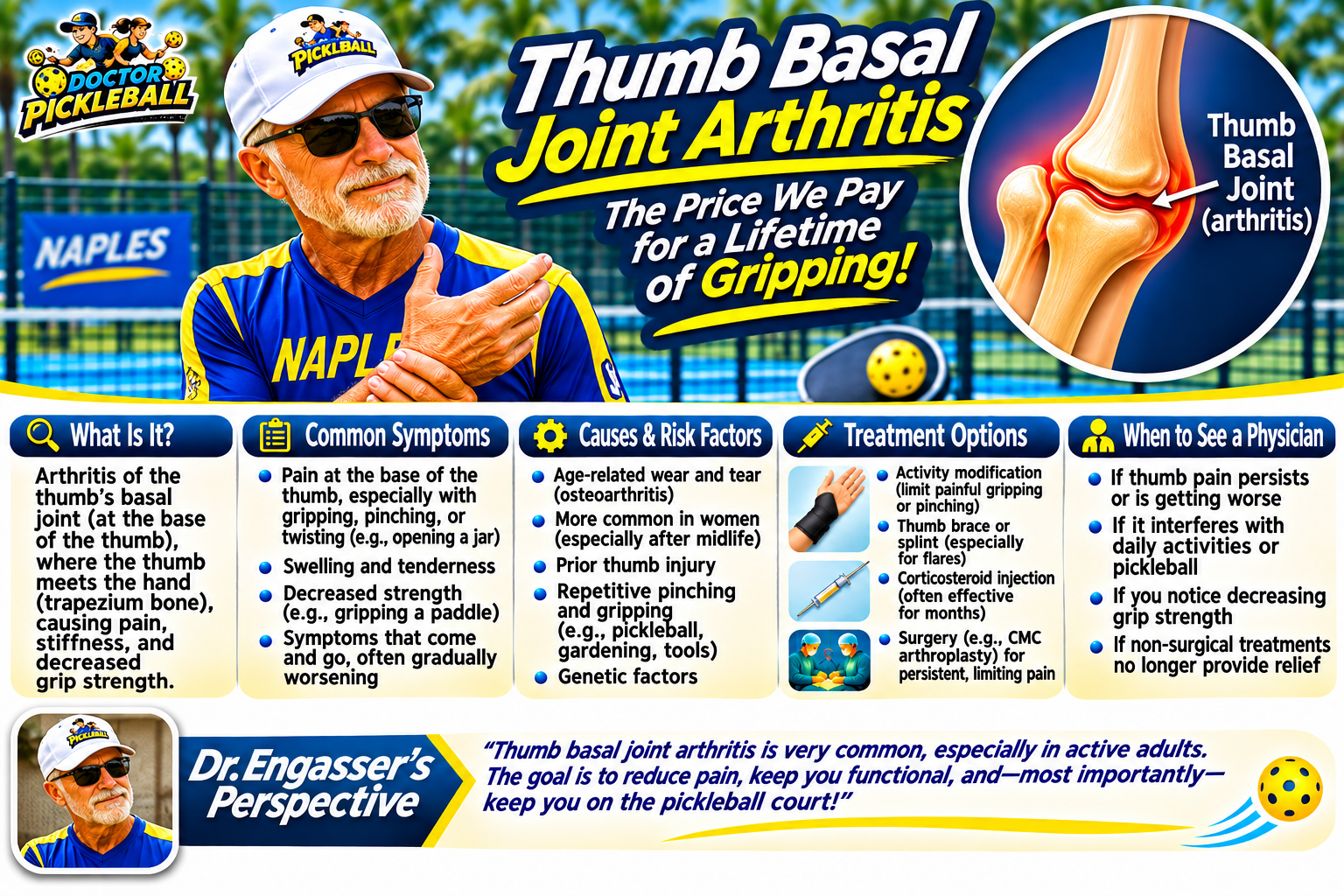
The joint at the base of your thumb does a lot of work. When it starts complaining, pickleball gets complicated.
Read article →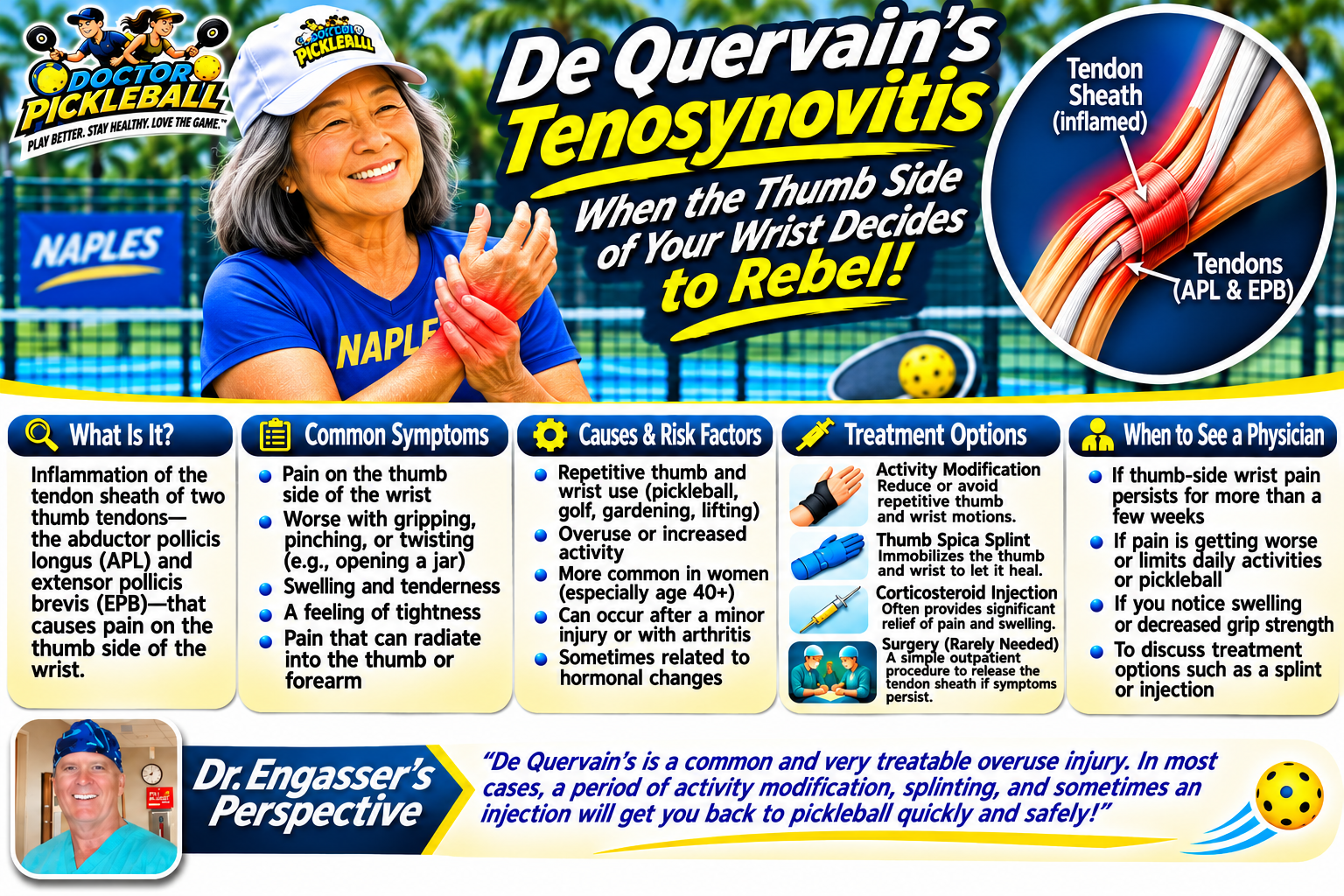
A mouthful to pronounce, a pain in the wrist to experience. Here's what's happening and how to fix it.
Read article →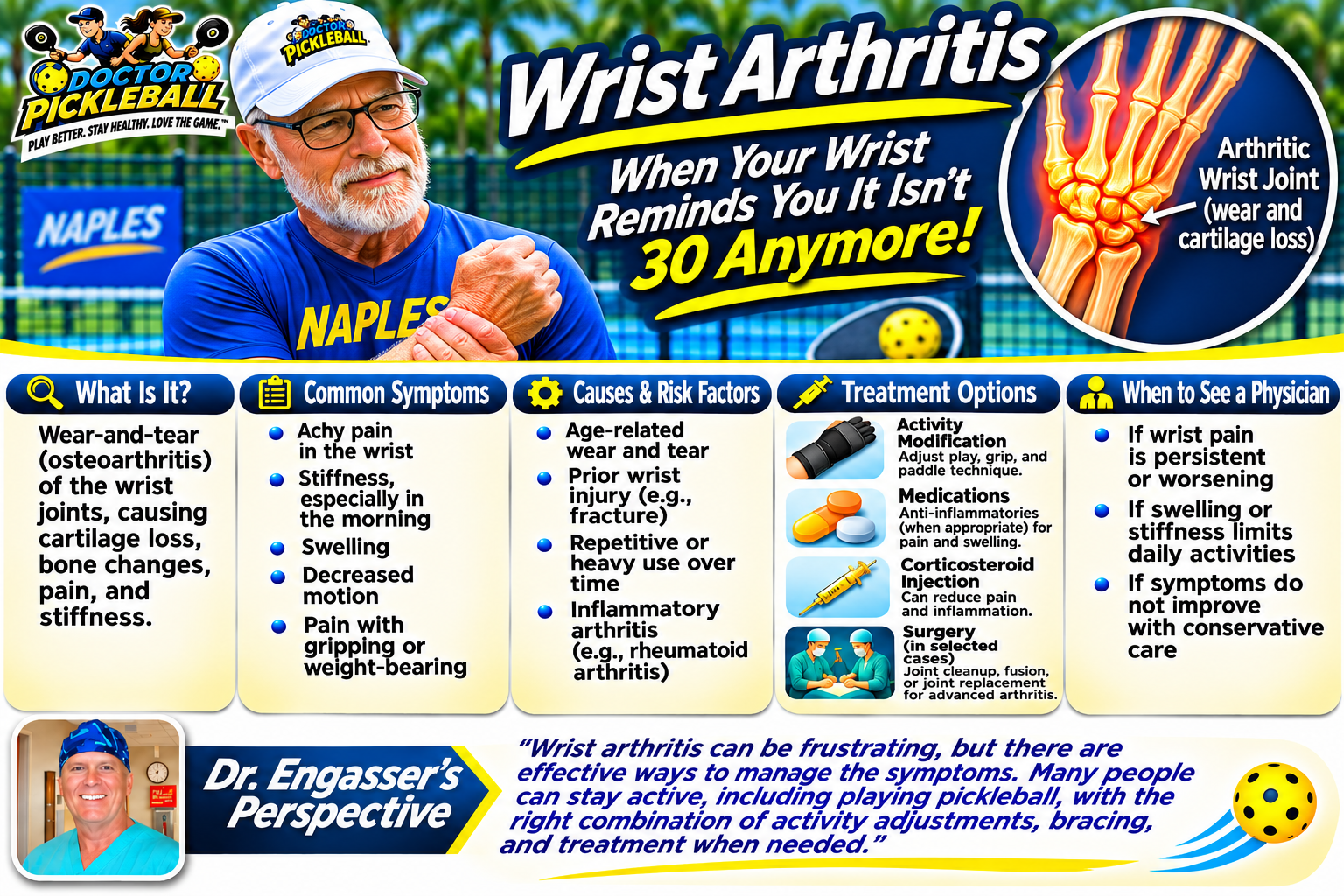
Wrist arthritis doesn't have to end your game. Understanding it is the first step to managing it.
Read article →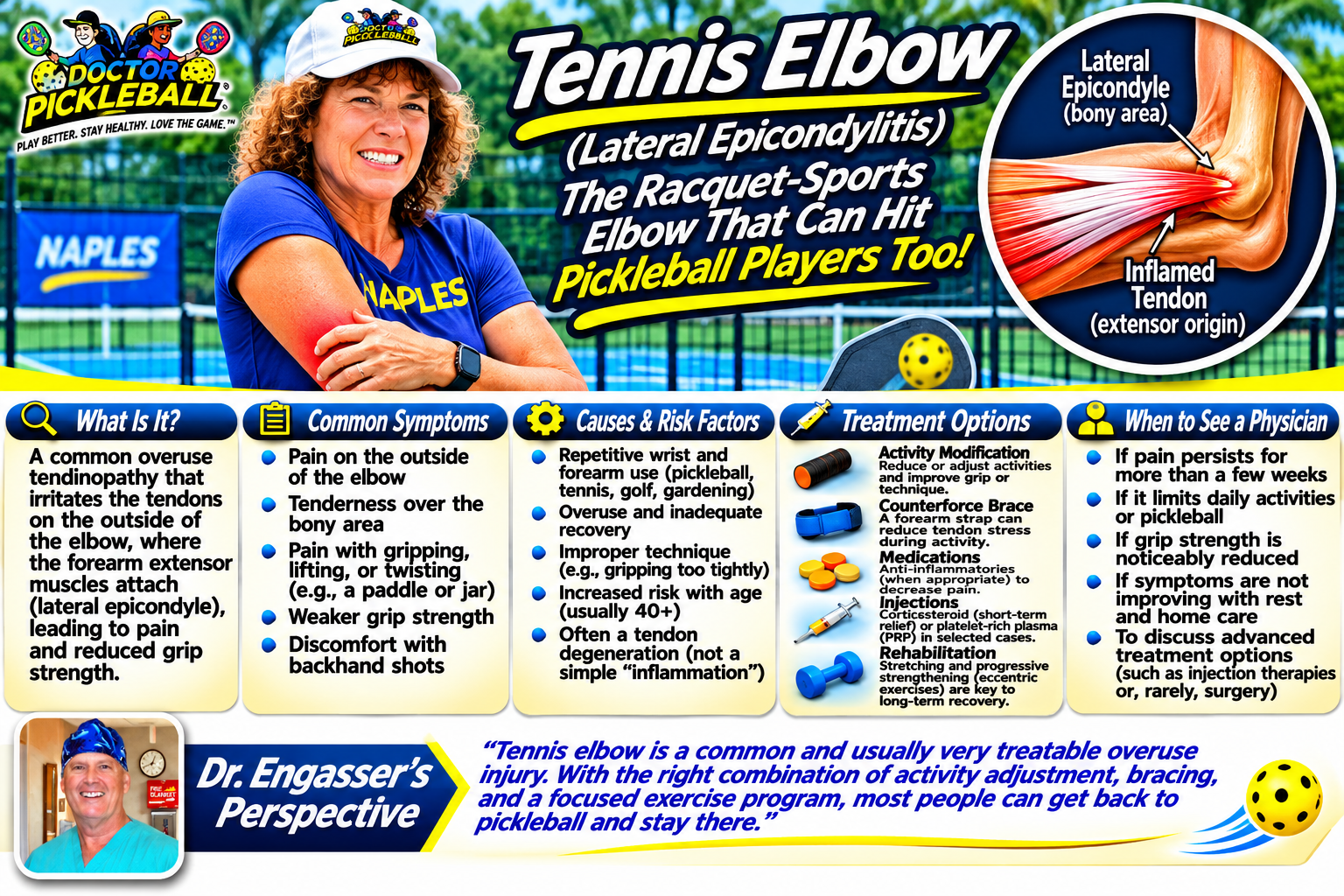
Despite the name, pickleball players get it too. The good news: most cases resolve without surgery.
Read article →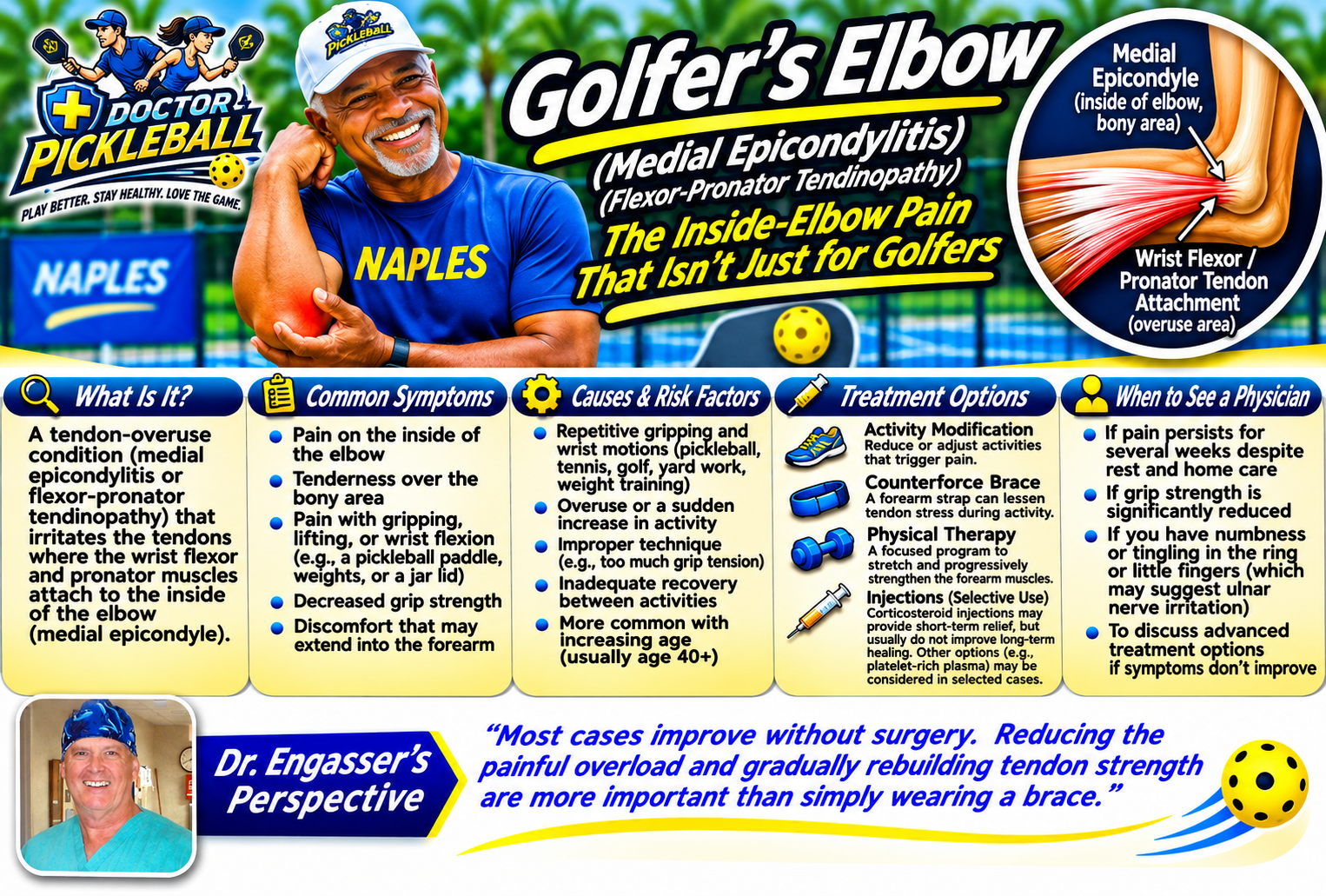
Pain on the inside of your elbow? You don't have to be a golfer — or stop playing pickleball — to deal with this.
Read article →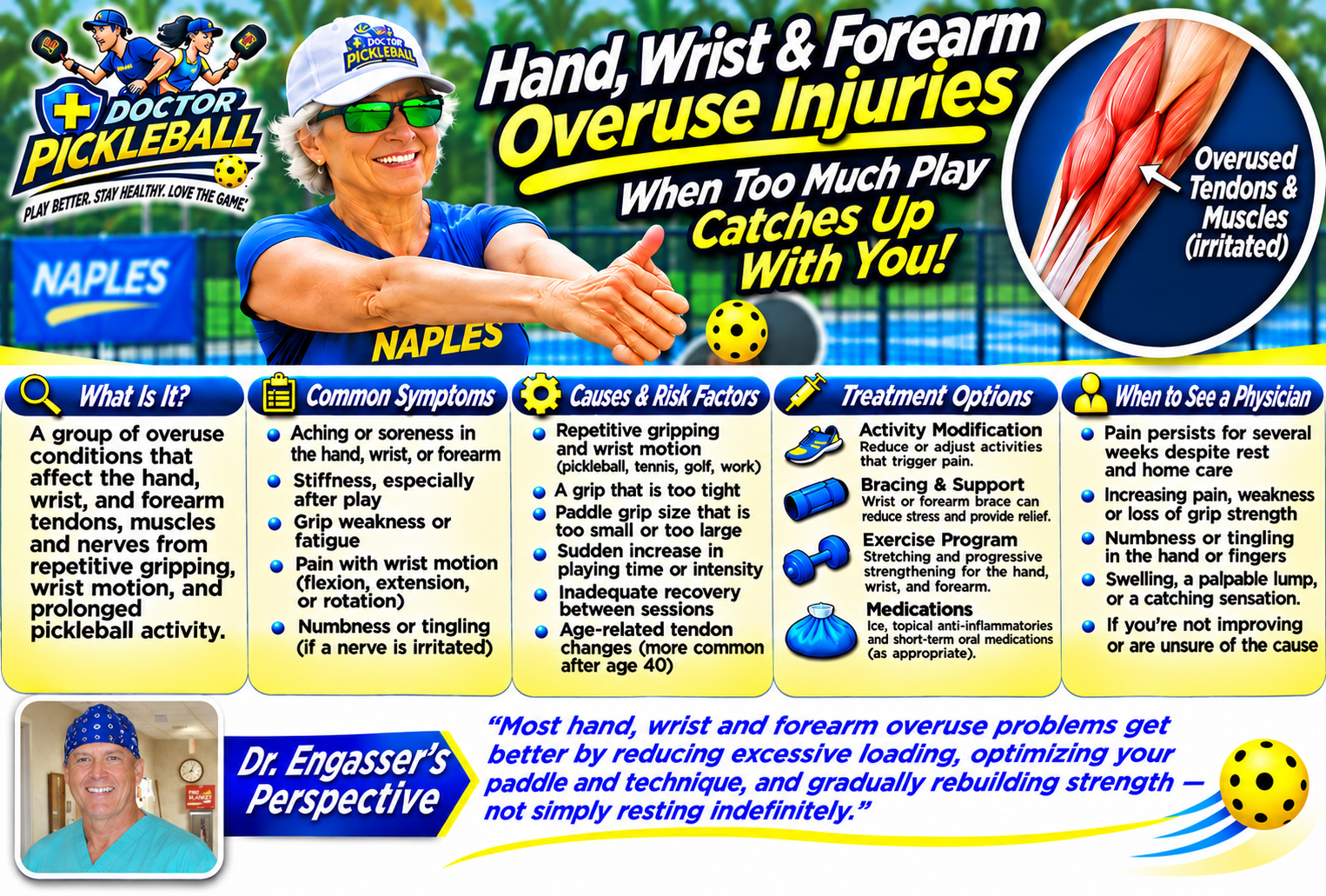
When you play every day, small stresses add up. Here's how to recognize overuse before it becomes a real problem.
Read article →"When Your Fingers Go to Sleep Before You Do!"
Overhead shots put real demands on the shoulder's hard-working rotator cuff.
Few things spoil a rally faster than a shoulder that suddenly refuses to cooperate — most rotator cuff problems respond well to sensible treatment.
Read article →Feet, ankles, and knees absorb every lunge, pivot, and sudden stop on the court.
That stabbing heel pain first thing in the morning has a name — and a solution.
The Achilles is the strongest tendon in your body. It still needs your respect.
A quick roll of the ankle can sideline you for weeks. Here's how to treat it right.
Millions of pickleball players have knee arthritis. Many of them are still on the court.
Not every meniscus tear needs surgery. Here's how to tell the difference.
Jumper's knee in a sport with no jumping? Pickleball's quick stops make it more common than you'd think.
The best injury is the one you never get. A few smart habits go a long way.
Five to ten minutes of light movement — walking, gentle stretching, arm circles — prepares your muscles and tendons for the demands of play. Cold muscles are injury-prone muscles.
Proper court shoes with lateral support, a paddle that fits your grip size, and appropriate eye protection all reduce injury risk significantly.
Many upper extremity injuries stem from poor mechanics — gripping too tightly, using wrist snap instead of body rotation, or reaching awkwardly for balls. A lesson or two pays dividends.
Overuse injuries are the most preventable injuries in pickleball. Build rest days into your schedule, especially if you play daily.
Have a specific injury or condition you'd like to see covered? The article library is growing.
About Dr. Engasser